
Restaurant analysis
Jean-Georges
Jean-Georges is the flagship restaurant of chef and restauranteur Jean-Georges Vongerichten. It opened in 1997 and was immediately showered with accolades. It won the James Beard Award for Best New Restaurant. It received a rare 4-star rating from New York Times food critic Ruth Reichl and has had that perfect score reaffirmed by Frank Bruni in 2006 and Pete Wells in 2014. When the Michelin Guide came to NYC in 2006, Jean-Georges was one of only 4 restaurants to receive 3 stars (the others were Le Bernardin, Per Se, and the closed-shortly-thereafter Alain Ducasse at the Essex House). After holding its 3 stars for over a decade, the restaurant was demoted to 2 stars in 2018, which it has held ever since.
Jean-Georges occupies an interesting position in NYC’s fine dining landscape. Of all the restaurants that currently hold at least one Michelin star it’s one of the oldest (only Gramercy Tavern, Daniel, Aquavit, and Le Bernardin are older) and it’s one of only 10 restaurants in the city to ever hold 3 stars. These two facts create an easy narrative of an old guard establishment languishing past its prime as its chef proprietor has turned his attention towards building a global restaurant empire.
But does this narrative actually hold water?
I have had two meals at Jean-Georges, a lunch in November of 2025 and a dinner in June of 2026. I enjoyed both meals very much, more than many of the other 2-star restaurants in the city. But at the same time it’s easy to see why the restaurant isn’t more loved and why a third star may not be returning soon.
Dining at Jean-Georges
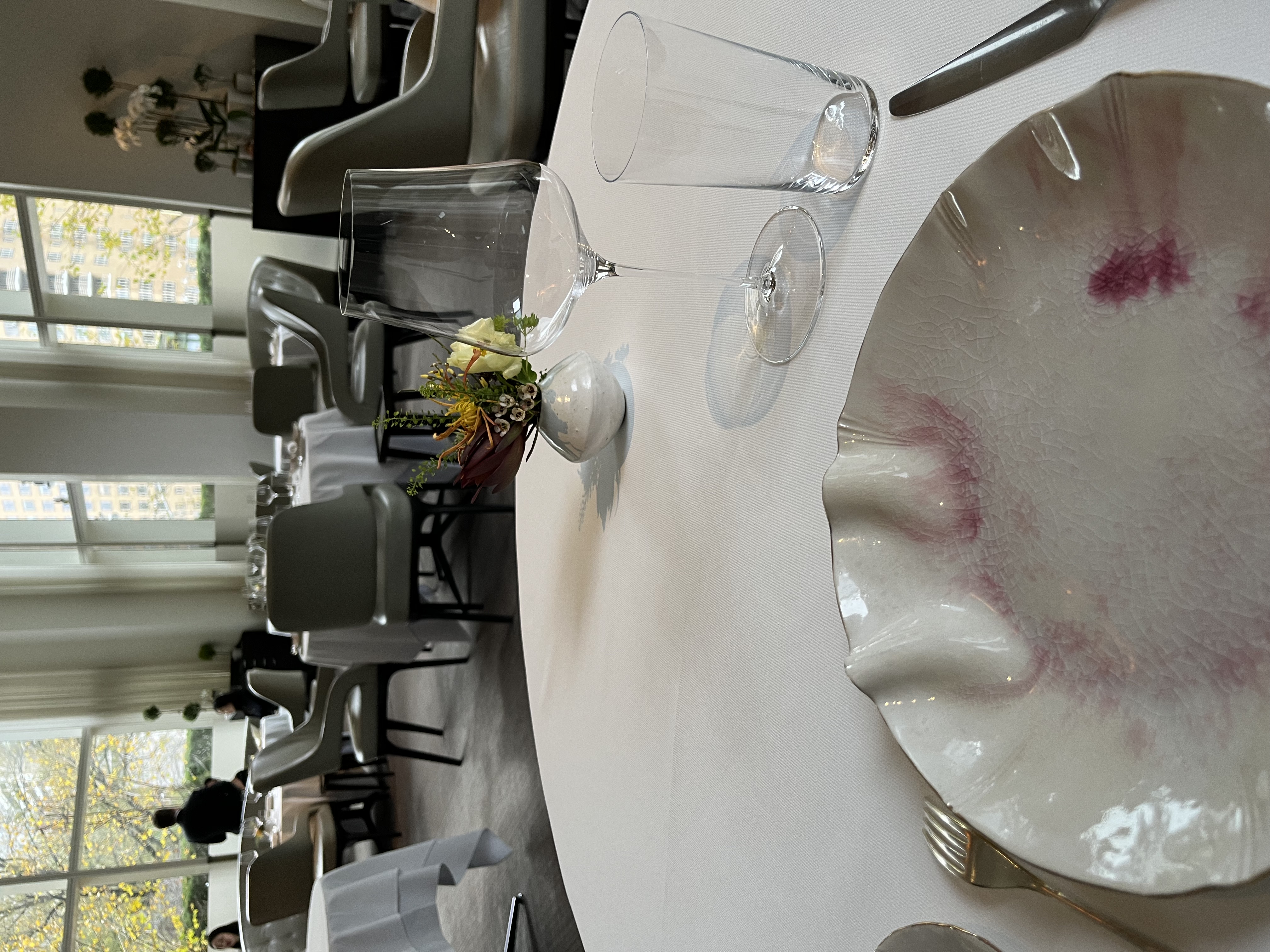
Jean-Georges shares a kitchen with its sister restaurant Nougatine. They also share a hostess stand and diners at Jean-Georges are led through the more casual Nougatine dining area into a sort of back room with a more intimate feeling. The space holds a combination of white tablecloths and modest flower centerpieces along with high windows and sleek modern-looking leather seats. I’ve seen multiple online reviews refer to the decor as dated. Interior design is, admittedly, not my strong suit so even if the room actually did violate a multitude of aesthetic principles I would have no idea. But to my eye the dining room manages to create an inviting atmosphere that still maintains a sense of refinement.
The service during both of my meals was the kind that I appreciate: servers who are able to match your energy as the meal progresses. Old-school restaurants tend to attract a clientele that expects professional stoicism so it’s understandable when servers at these places begin in that mode. But both of my servers at Jean-Georges were quick to reciprocate my enthusiasm for the food and to shed any semblance of stuffiness in our interactions.
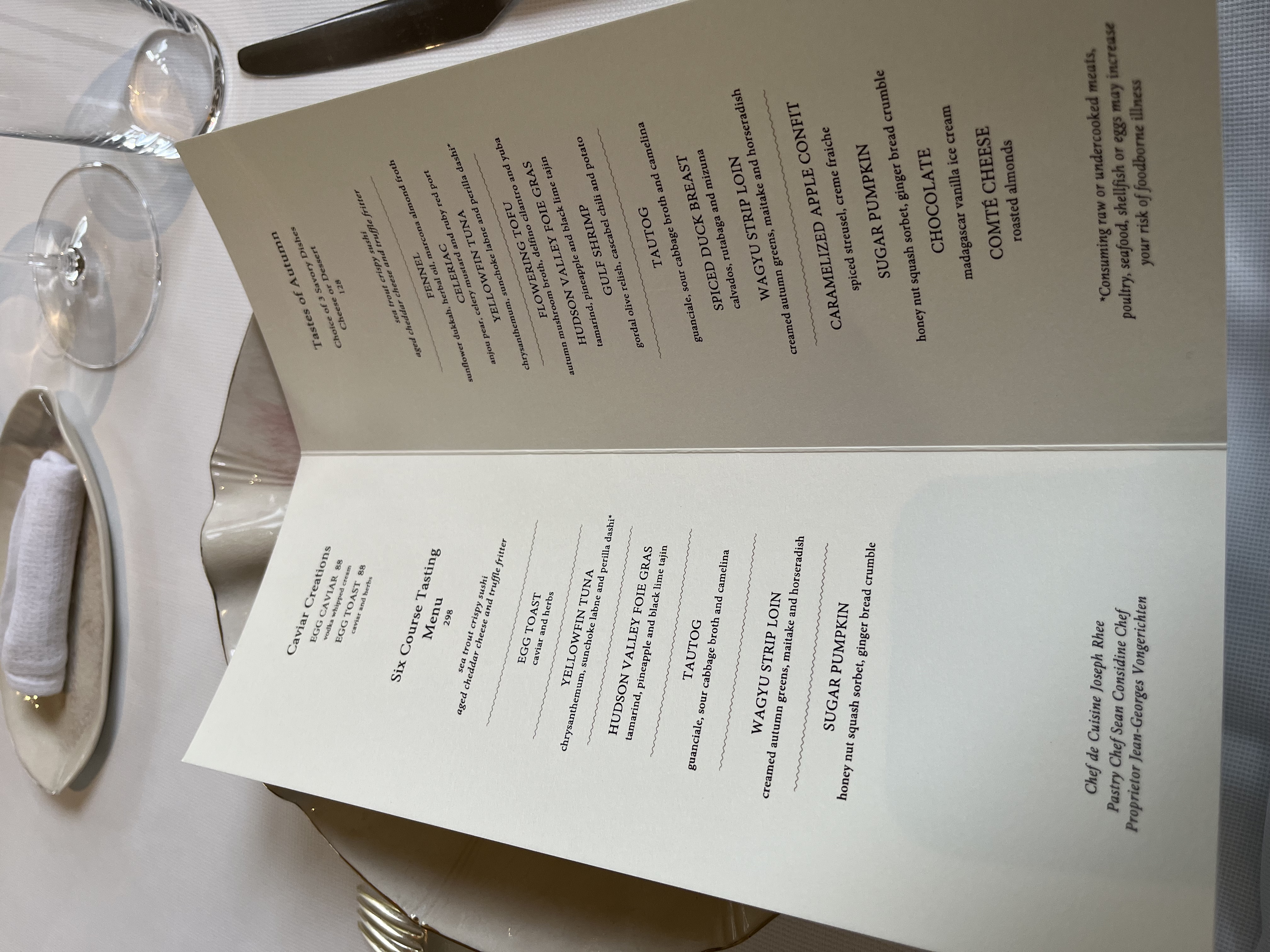
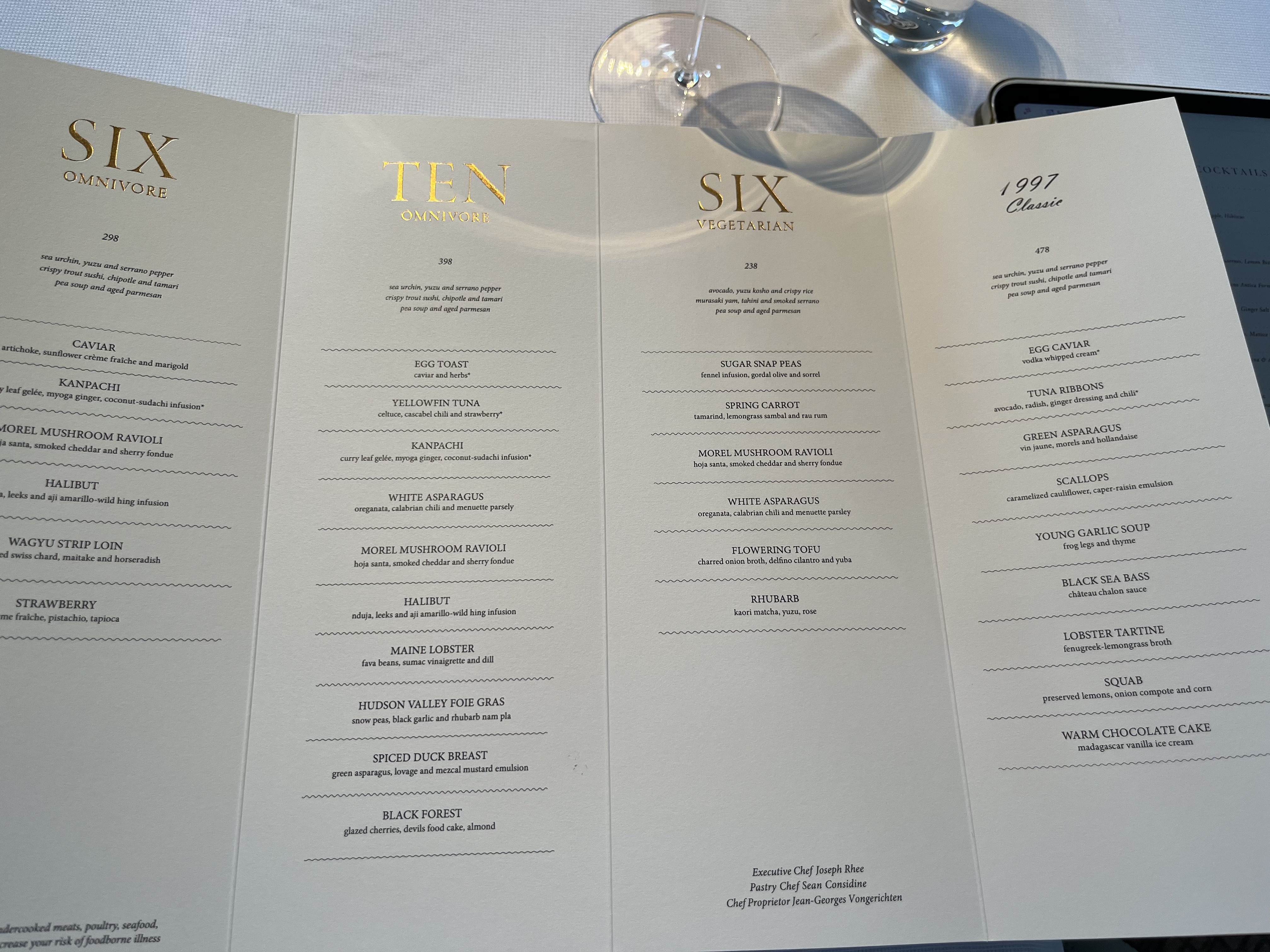
Keeping with the conventions of modern fine dining, Jean-Georges does not offer an a la carte menu. For lunch, diners can choose either a (very modestly priced) four course prix fixe or a six course tasting menu. Dinner offers six and ten course tasting menus as well as a (rather outrageously priced) “1997 Classics” menu that features dishes from the first year the restaurant was open.
For my first visit I ordered the six course omnivore lunch and for my second I ordered the ten course omnivore dinner. The former lasted an hour and a half and the latter around two hours and fifteen minutes. This is consistent with solo dining experiences across the city and for both meals I found the course progressions generally well-paced.
The food
While a 30 year old restaurant that bears the name of its French chef proprietor may create the expectation of old school French cuisine, the actual dishes served are anything but. The Michelin Guide categorizes the cuisine of Jean-Georges as Contemporary/French Contemporary, with “contemporary” generally referring to the globalized sourcing of ingredients from a variety of cuisines, but this doesn’t really capture what gives Jean-Georges its personality.
In a world where fine dining meals are often described as a symphony of tastes, Jean-Georges stands out as a brass band of bold flavors. Their “contemporary” use of global ingredients is in fact a defiant middle finger to anyone who sneers at fusion dishes. Their sauces stand as the primary artifact of their French roots, but unlike conventional sauces that elevate a star ingredient, there’s a case to be made that at Jean-Georges the sauces are the stars. In fact, I’d go so far as to say the sauces are not just the stars, they’re outright divas that demand the spotlight. It’s a feature that may speak to a certain lack of refinement in the kitchen, and may be the thing that’s preventing the return of a 3rd star. But it’s hard for me to complain about the food when the flavors are as good as they are; it’s like a snarky subordinate whose impertinence is excused only because they manage also to be funny.
Here are some of the dishes I’ve enjoyed:
The signature
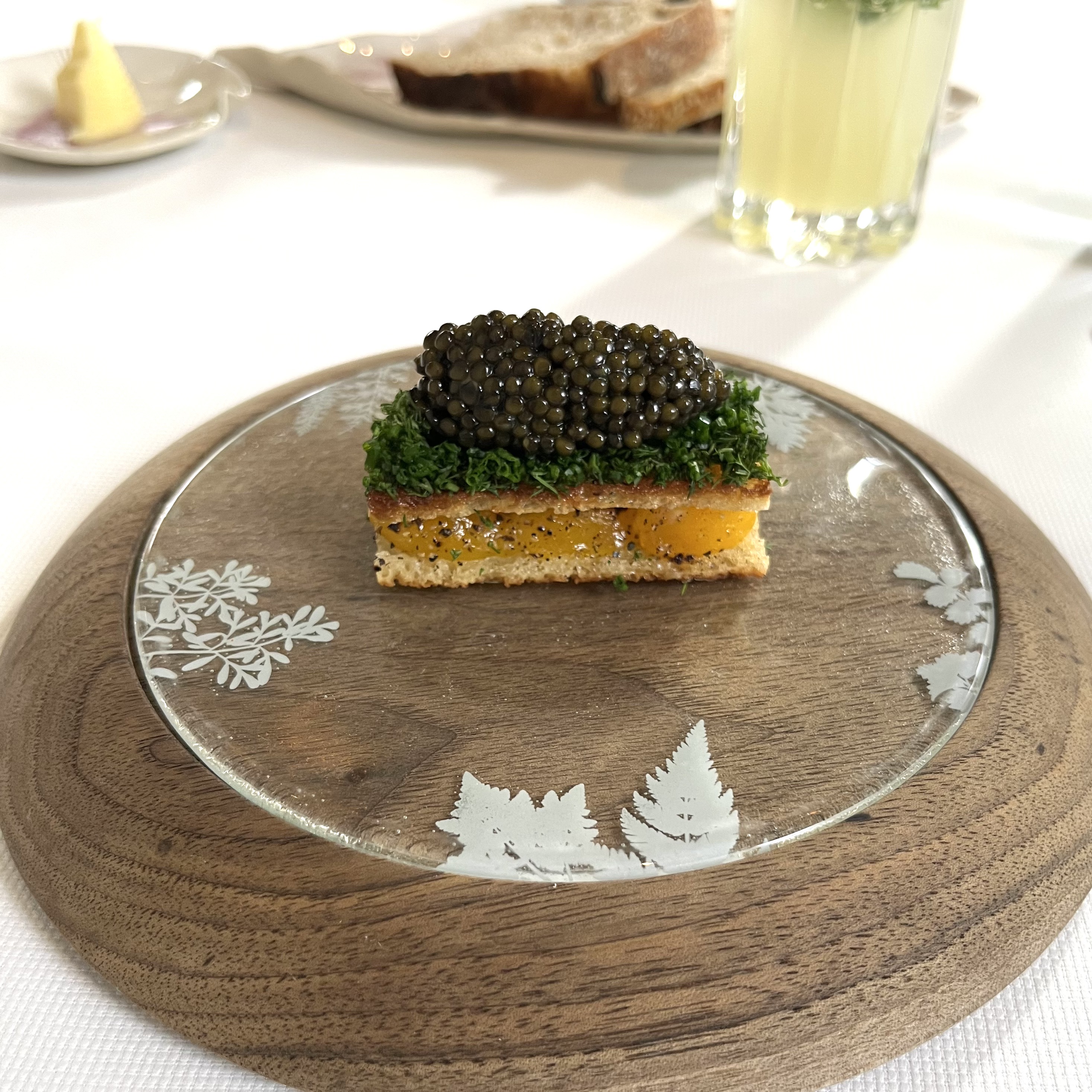
The egg toast is the signature dish of Chef Vongerichten and can be found at several of his restaurants. It’s uncharacteristically minimalistic compared to the other dishes I’ve had at Jean-Georges, no doubt from an earlier point in his career, but one bite is all it takes to see how it has stood the test of time. The egg yolks are cooked sous vide to a texture resembling cheese, yet retain their velvety richness. They are sandwiched between two crispy pieces of brioche toast that manage to stay light and buttery at the same time. The eggy, buttery flavor is nicely lifted by a generous coating of chives and a dollop of caviar provides a nutty saltiness that ties the whole dish together.
The egg toast was the one constant dish across both tasting menus and was a notable highlight. There is an argument to be made that it stands in too stark a contrast to the rest of the tasting menus, but I would counter that its position as the first course allows it to function as an amuse bouche and minimizes any dissonance. This is a common difficulty that older restaurants face: whether to preserve older signature dishes or let them fade away for the sake of modernizing the whole menu. For myself, I’m always happy to see signatures remain. I’d rather taste the personality of a chef, even from their younger years, than some pursuit of innovation for innovation’s sake.
International flavors
The use of ingredients from around the world has, for many years now, been a common feature of dining at all price points from New Jersey diners to The Cheesecake Factory. In fine dining menus this is often reflected by light accents, some shiso or yuzu here, a little tropical fruits there. These accents can work to varying degrees and sometimes carry a faint whiff of exoticism, mere window-dressing to make the dishes sound refined purely by dint of proving the chef has traveled abroad.
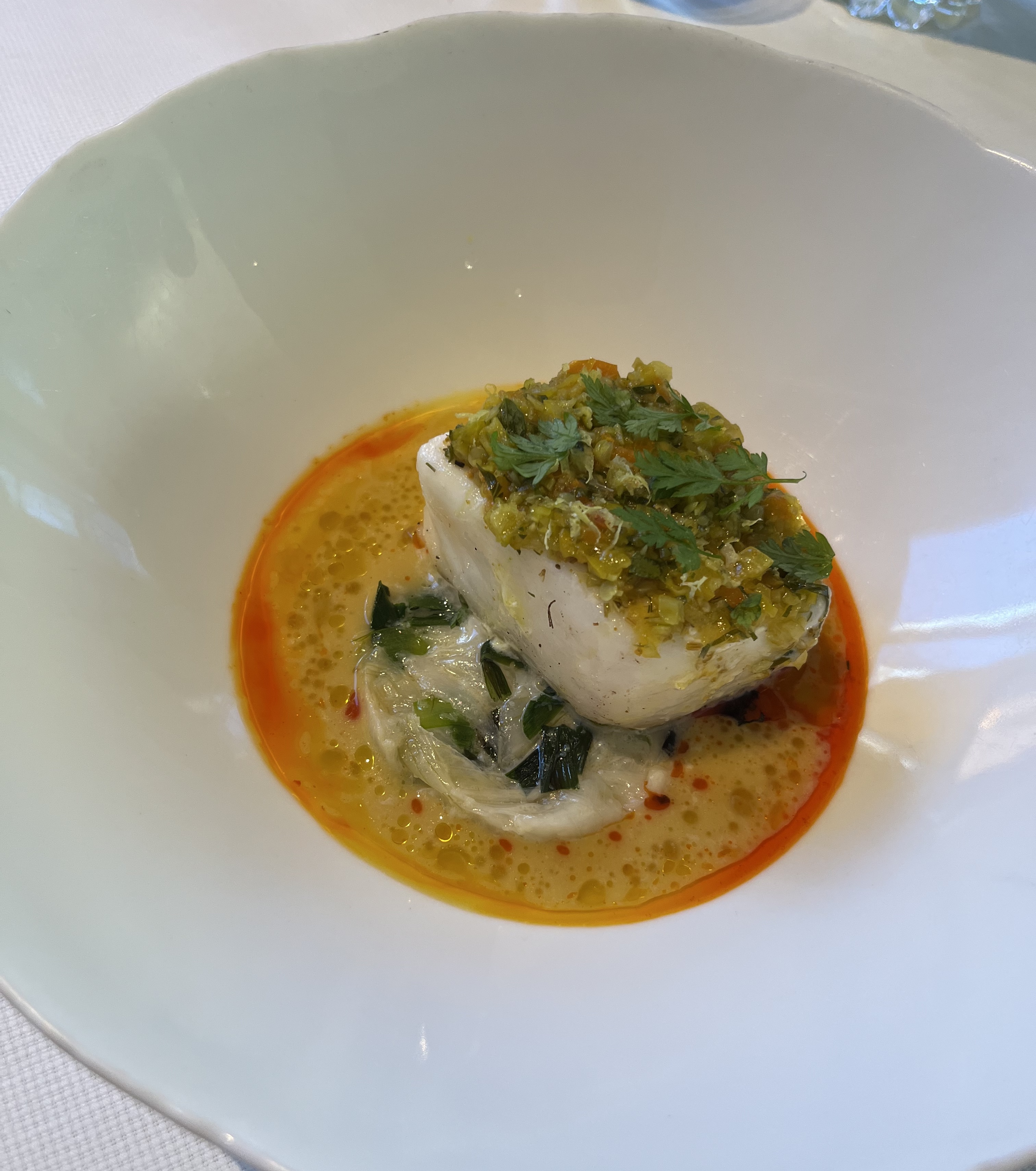
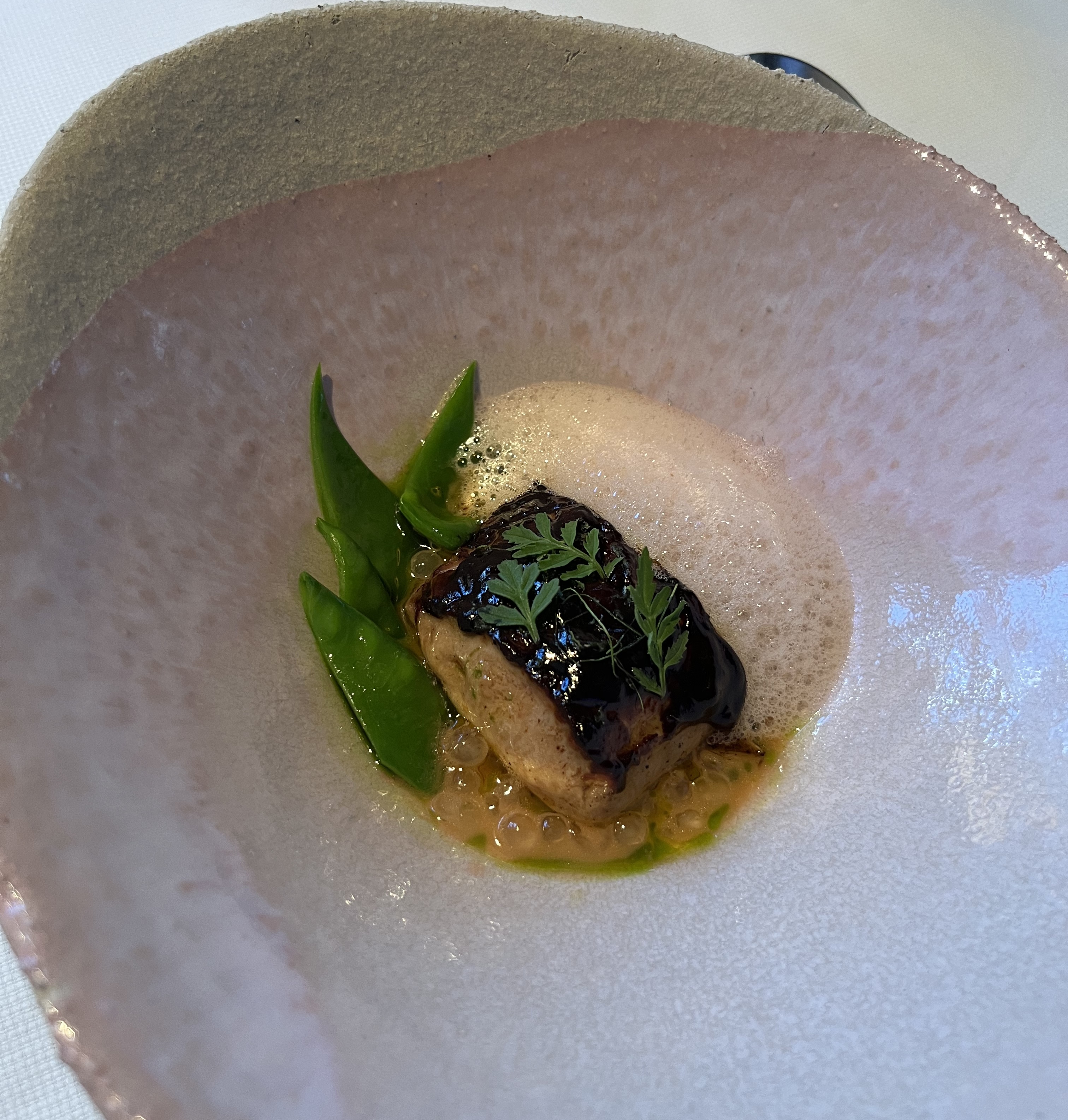
Jean-Georges stands out by using ingredients and preparations not commonly found even among its fine dining contemporaries here in NYC. Their halibut was served with nduja, leeks, and an asafoetida (hing) infusion. Asafoetida is an ingredient I’m well familiar with from my love of cooking south Asian dishes. It’s a deeply pungent plant resin (the British named it “devil’s dung”) though cooking in hot oil gives it a delicate onion flavor that pairs well with alliums like leeks.
A foie gras dish was served with nam pla, a Thai fish sauce. This strong sauce enhanced the savory unctuous qualities of the foie gras and the black garlic and snow peas gave the dish a distinctly southeast Asian flair.
Bold and spicy
Jean-Georges excels in their willingness to engage with bold flavor profiles, especially the smoky and the spicy.
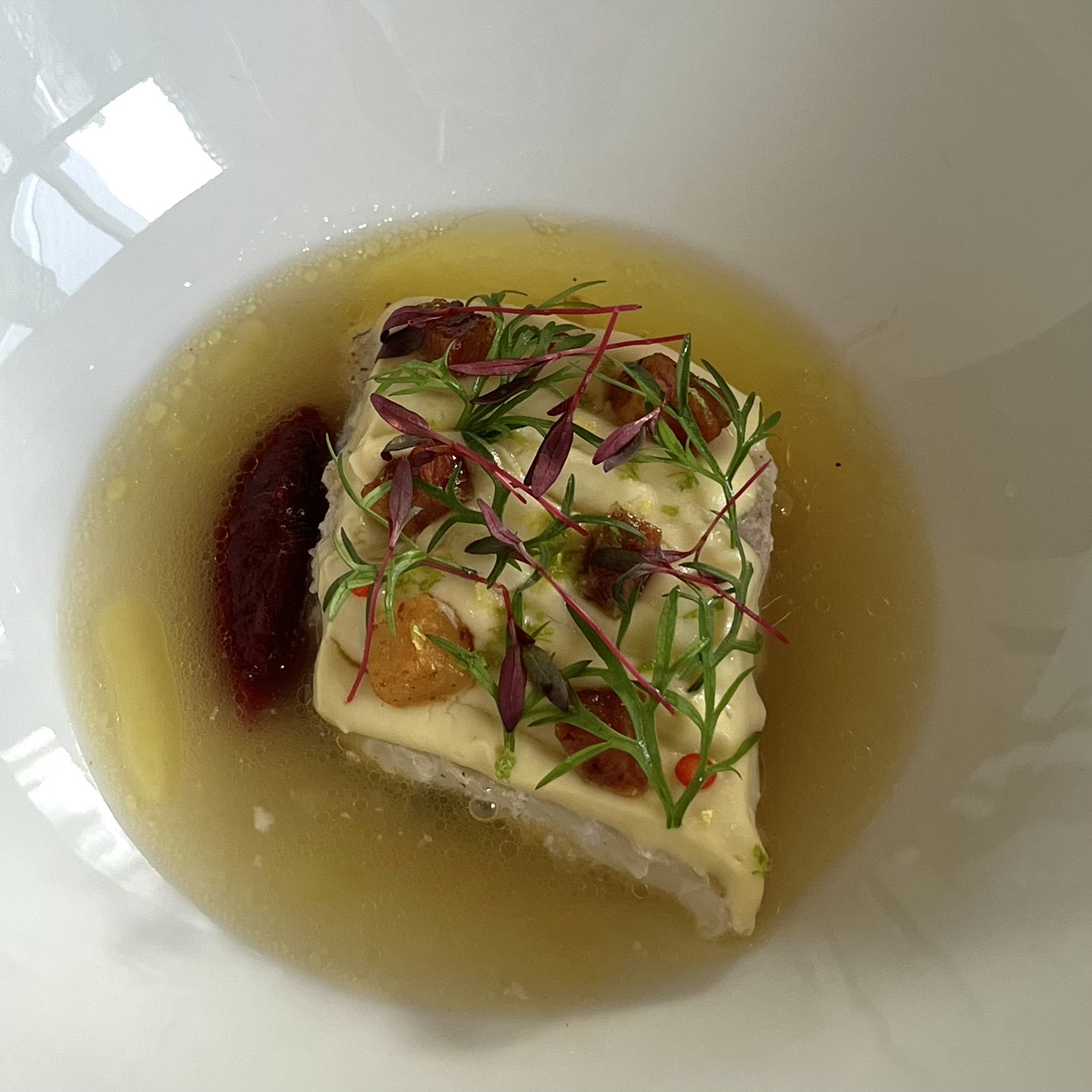
During my first meal, a tautog was served with guanciale (cured pork jowl) and charred cabbage, giving the dish a pronounced smokiness that was cut by the acidity from a helping of red cabbage saurkraut and an herbal camelina oil.
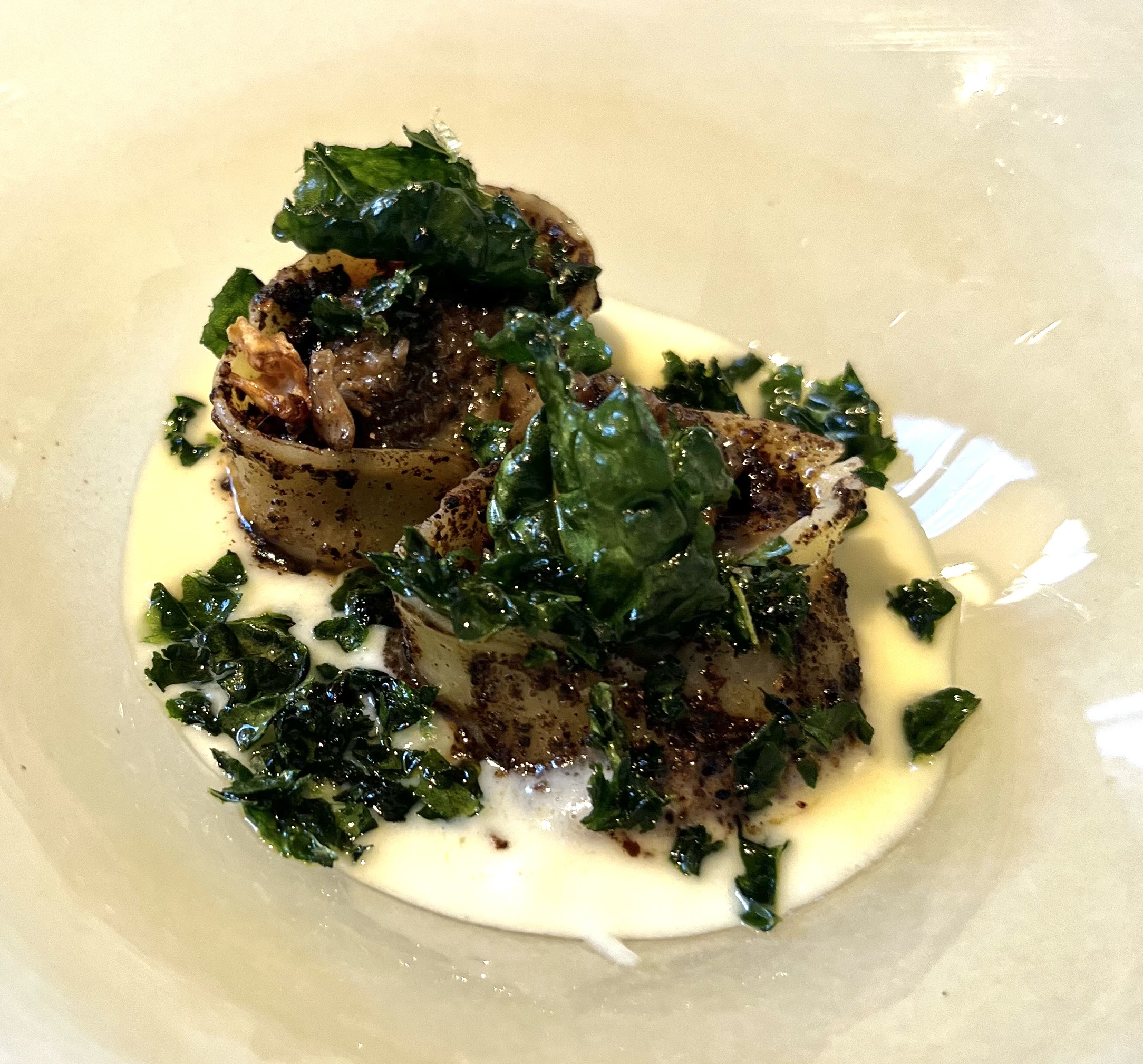
My second meal featured a morel mushroom ravioli with Mexican pepperleaf and smoked cheddar. This umami bomb had the distinct smokiness and spiciness of a rustic country sausage, with such a deep and enduring flavor that it might be my favorite savory dish I’ve had here.
Many of the above dishes were also impressively piquant. Spiciness is often avoided in fine dining lest a dish of excessive Scoville units spoil a guest’s taste buds for subsequent courses. But my meals at Jean-Georges have managed to strike an impressive balance of allowing multiple dishes to carry a bit of kick, often characteristic of the cuisines from which they borrow, without leaving one’s mouth too numb.
Develops as you eat
Another quality I appreciate in some of the dishes at Jean-Georges is that their flavors build and develop as you eat. Contemporary fine dining often feels like it emphasizes “flavor bombs” that are intended to bring about instant ecstasy the moment they hit your tongue. But at Jean-Georges I’ve had several dishes, even single bites, that don’t reveal their full depth until after I’ve swallowed.
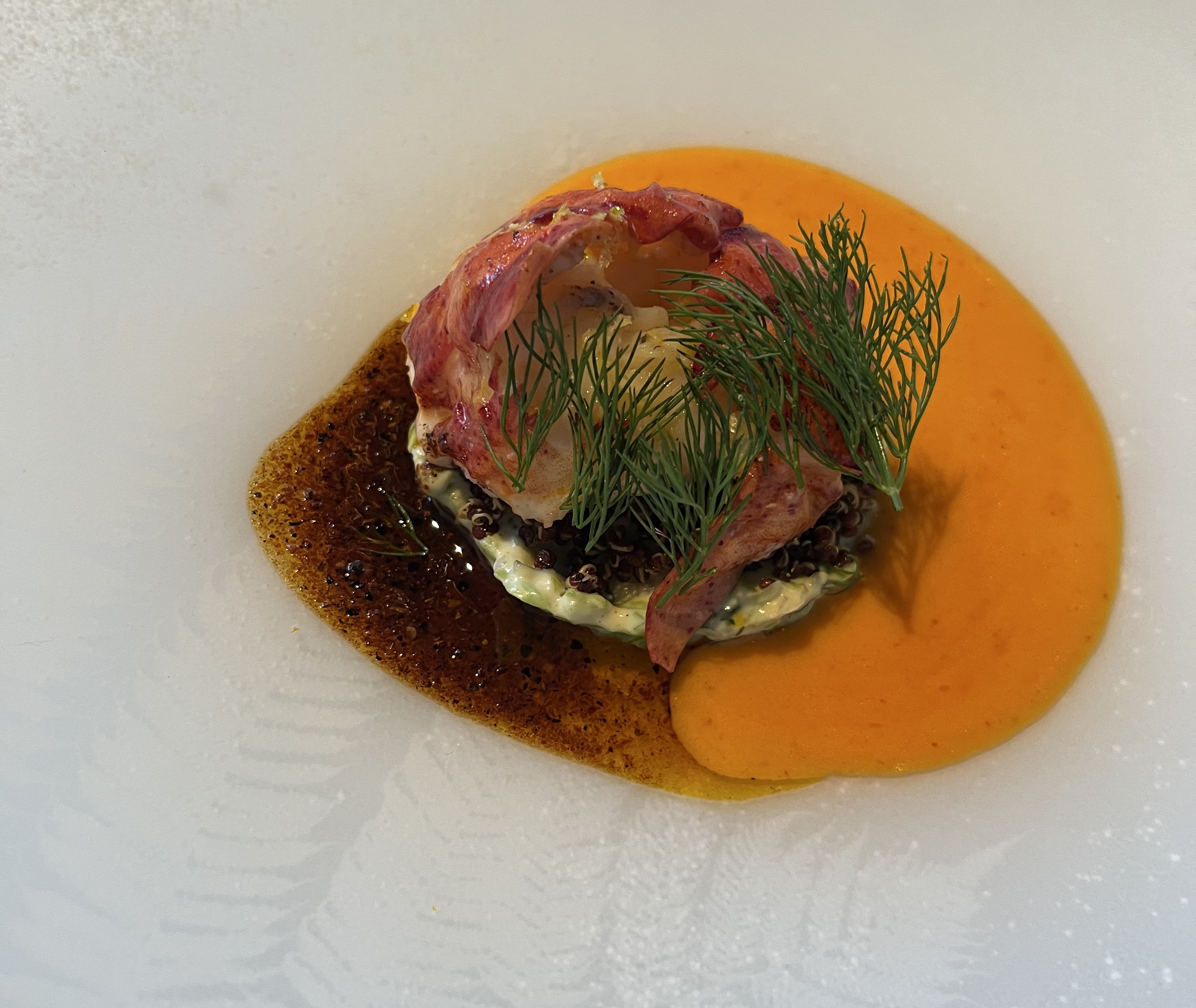
One such example is a lobster served with dill and sumac vinegarette. On a first bite the lobster was the feature with only light herbal notes. But with each subsequent bite I took I discovered deeper and richer notes of pine and citrus grass. By the time I finished it had fully bloomed into a bright and fresh taste that lingered for many minutes after my plate had been cleared. To refer to the flavor of a dish as a “journey” feels like purple prose until one has actually experienced a dish that feels that way.
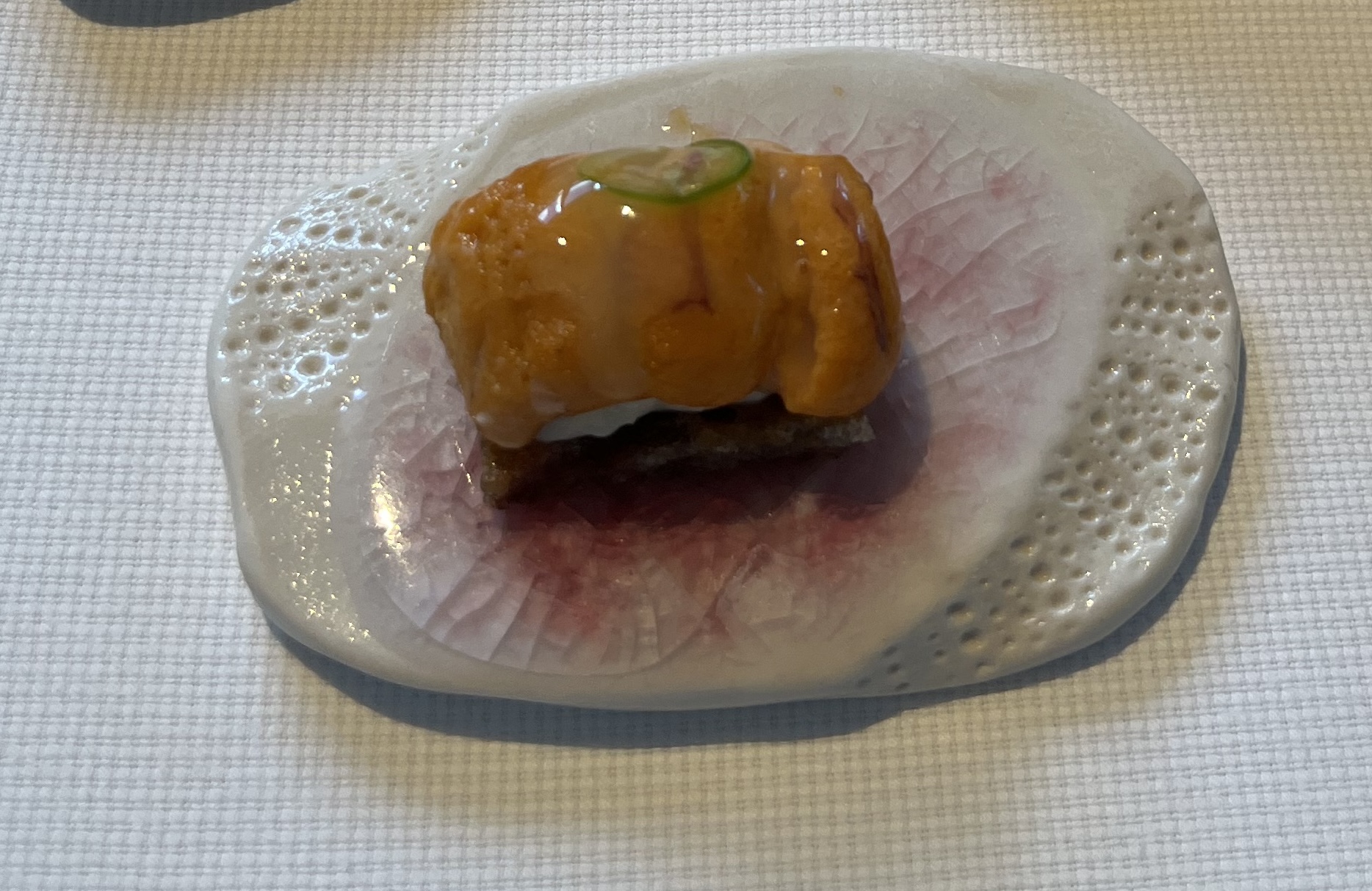
Another offering with this quality was an amuse bouche: a Santa Barbara sea urchin on sourdough canape prepared with yuzu and serrano pepper. This seems to be a recurring staple at Jean-Georges as the food critic Vedat Milor noted having a similar amuse in a negative review of Jean-Georges from 2019. Milor was unimpressed by the bite, complaining that the use of pepper “totally emasculated” the flavor of the sea urchin. Clearly Jean-Georges has refined the dish in the last 7 years because I found the pepper to be a beautiful complement to the bite. The sea urchin carried a nice sweetness, balanced by the acidity of the creme fraiche, and only after swallowing could I detect the mild kick from the serrano. This light spiciness served an intriguing flourish that left my mouth with a different flavor note than I had tasted when I was chewing. This is the sort of complexity that I think perfectly suits the role of an amuse bouche. I have found far too many places “phone-in” their amuse with a basic canape so this bite was a welcome change of pace.
Busy flavors
While I am able to enjoy many aspects of the dishes at Jean-Georges, I do not find them flawless. One recurring feature of the dishes at Jean-Georges is a multitude of components and flavors. In some cases these work wonderfully, but in others they feel a bit confused.
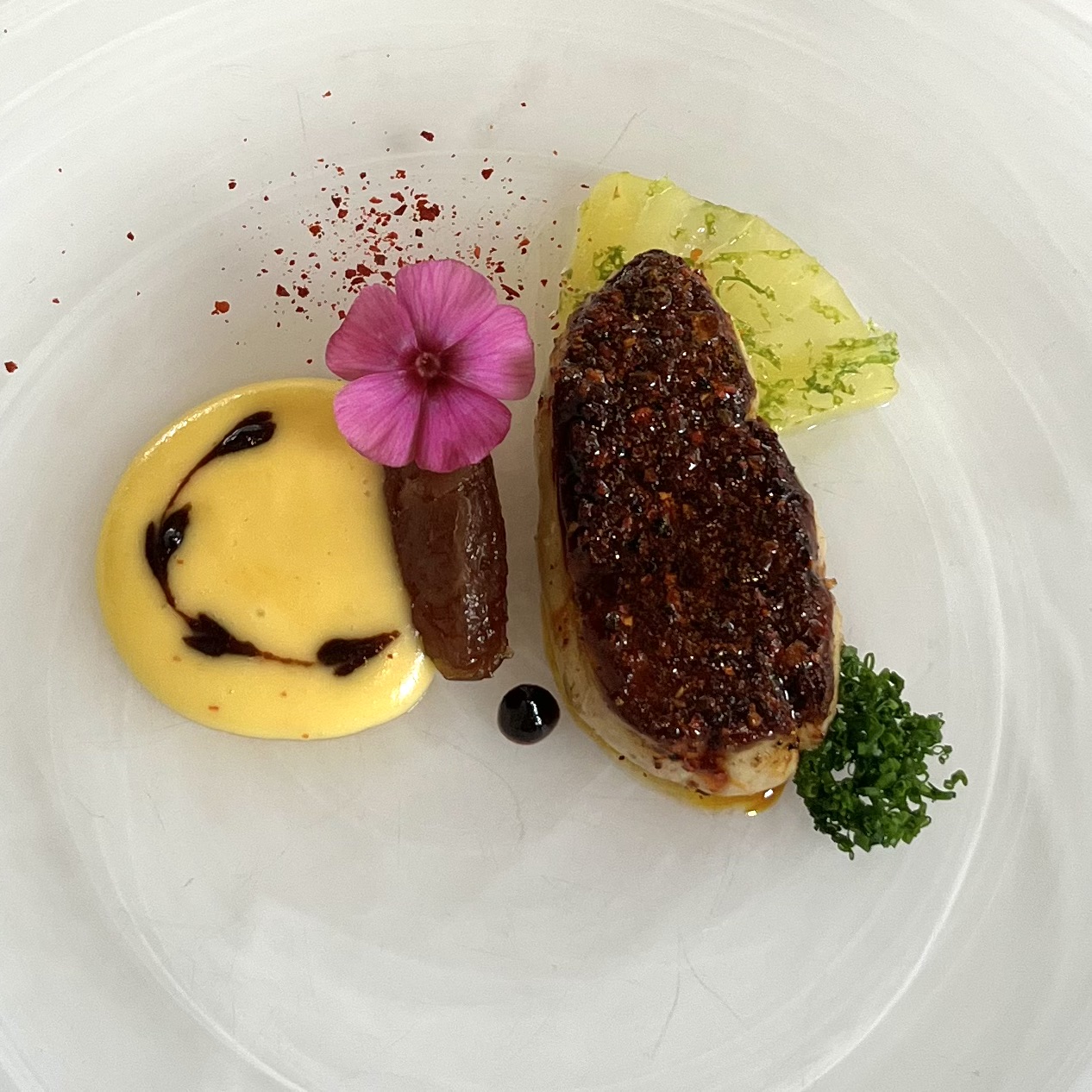
This foie gras dish is a successful example. The foie gras was paired with pineapple, tamarind, and black lime sauces, all acidic components that enhanced the natural sweetness of the liver. The foie gras itself was crusted with pepper, adding a spicy note that enhanced the liver’s savoriness. The combined effect was an overarching “sweet and savory” note that highlighted the different dimensions of flavor in the foie gras.
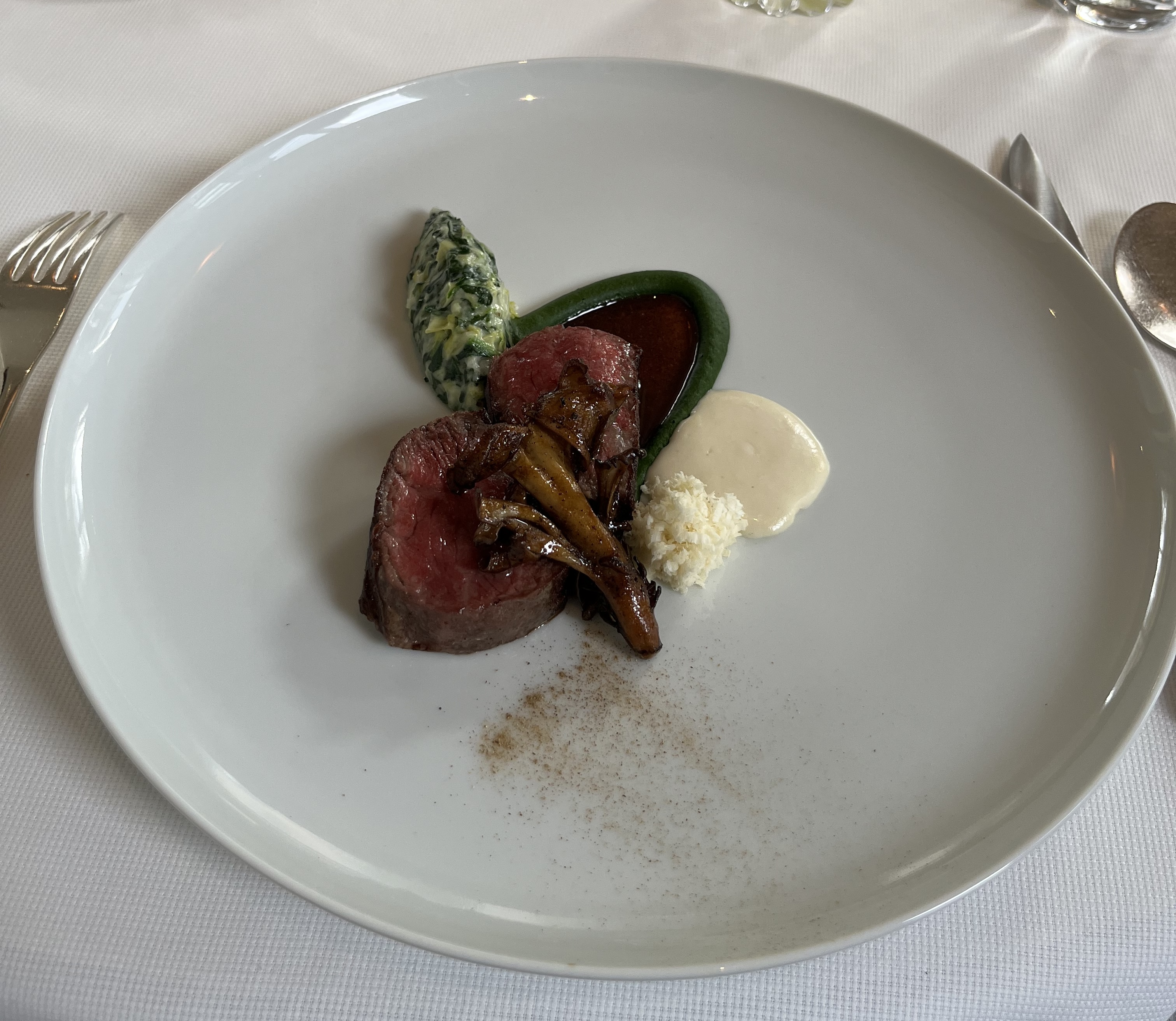
On the other hand, this wagyu striploin had no such cohesion. It was paired with maitake mushrooms, horseradish, creamed winter greens, shaved parmesean, and a green sauce that escapes my memory. No single bite was bad, but there were so many components that it’s hard to remember what the dish tasted like other than that it stumbled wildly across the flavor spectruum depending on which components one ate with the beef. This is a classic example of a dish where less would have been more.
Insufficient regard to the ingredient
One of the downsides to having strong sauces and side components is when they overpower the flavor of the main ingredient. This creates a situation of “substitutability” where the dish tastes like any ingredient could have stood in place of the one used and is a sign that its natural flavors are not allowed to shine.
This was a particular issue I had with my June visit. It was during asparagus season, one of my favorites as both green and white asparagus are vegetables that I love. At the height of its freshness, asparagus has a wonderful sweetness and a fresh earthiness. Jean-Georges served both green and white asparagus, but had I been blindfolded I wouldn’t have been able to tell.
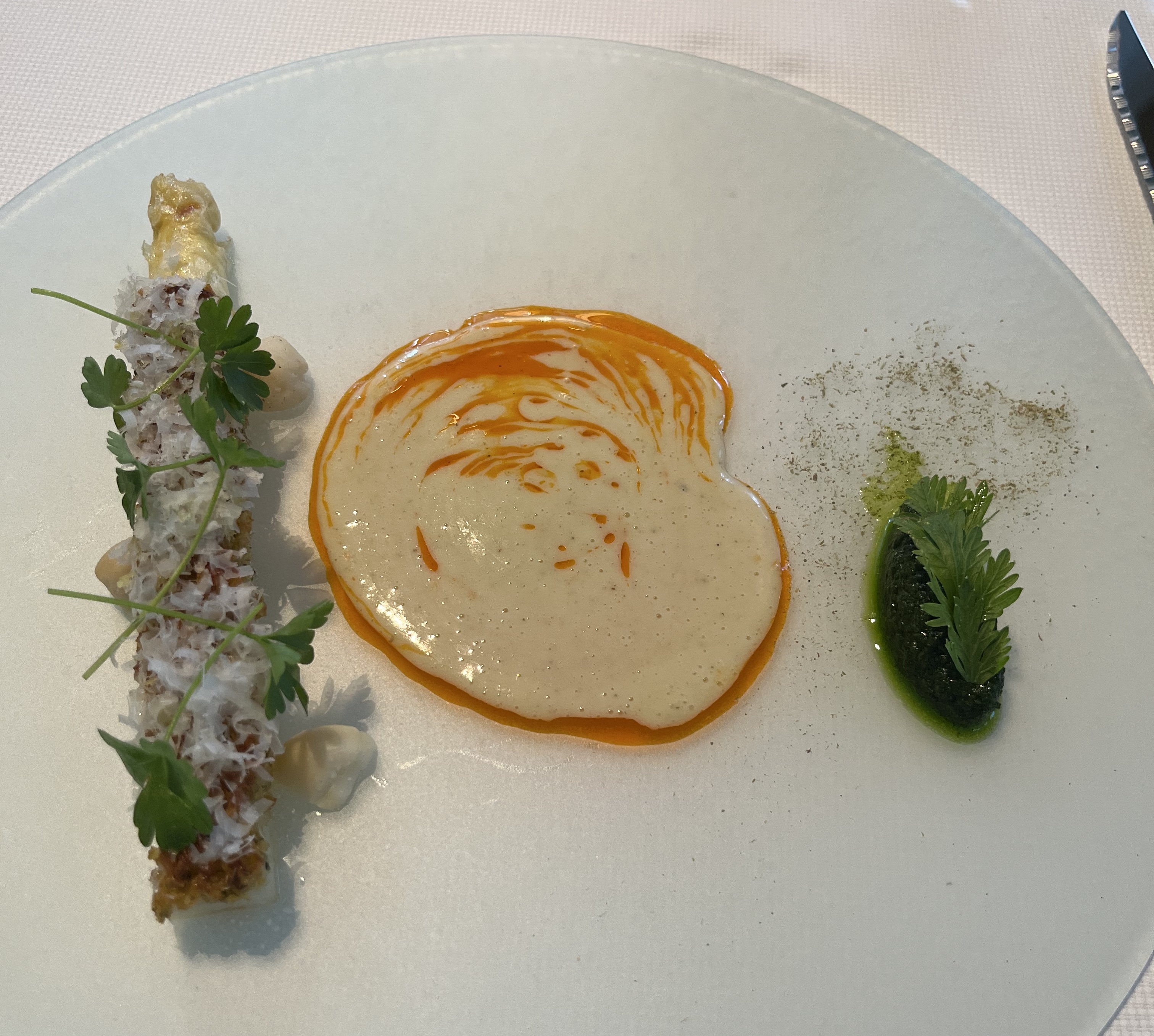
The white asparagus was coated in breadcrumbs and aged parmesean and served with a calabrian chili sauce. The overall flavor of the dish was distinctly Italian and nice enough on its own. But the white asparagus was reduced to a role that could have been easily filled by any generic root vegetable. None of its sweet or bright-grassy notes could make their way through the competing flavors. Was this a sign of asparagus that was past its freshness? Or was it simply overpowered? I could not tell, and it proved to be a bit of a disappointment.
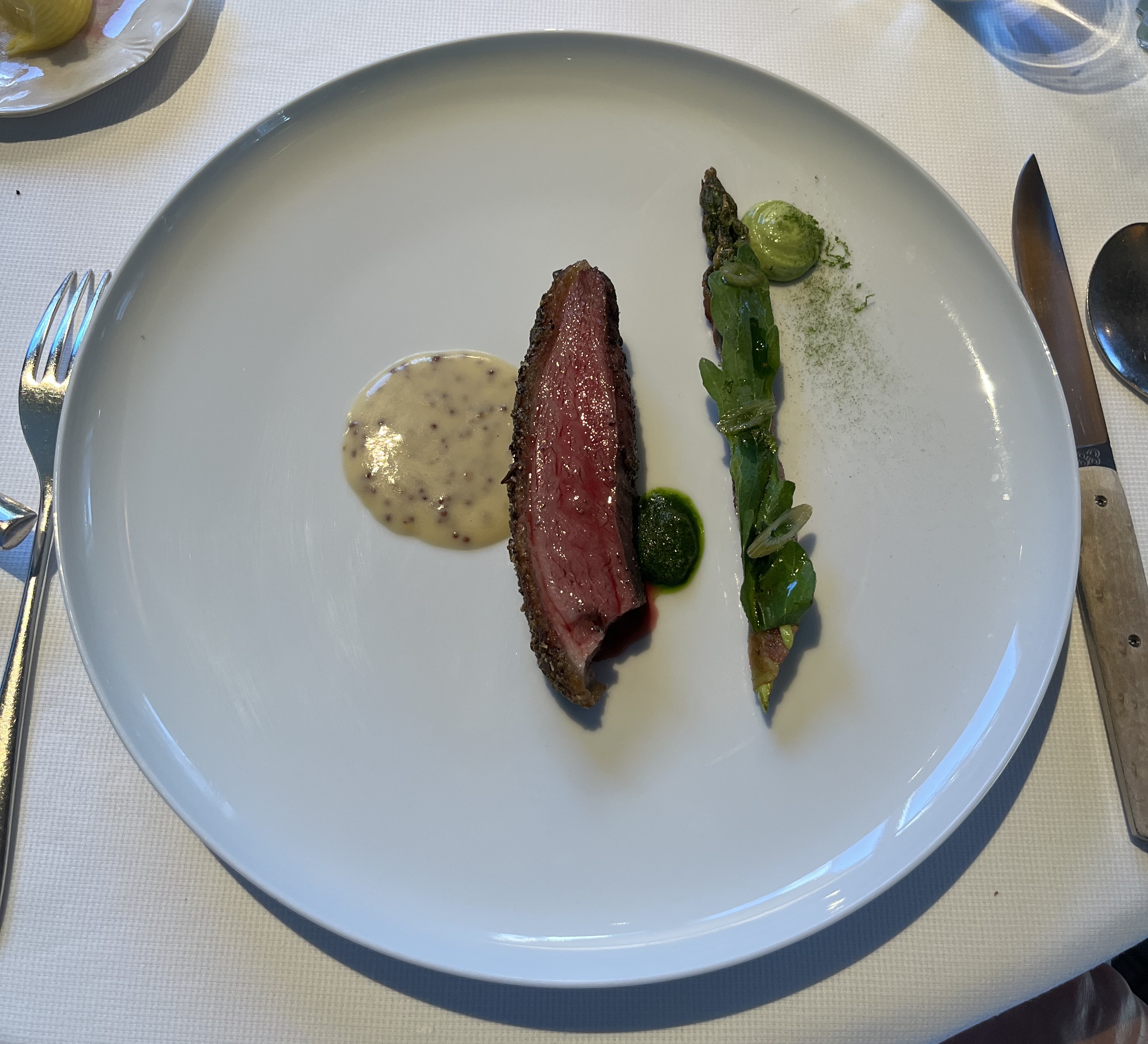
The green asparagus, which came as a side accompaniment to some spiced duck, did not fare much better. This asparagus was wrapped in a very smoky prosciutto, which complemented the spiced duck and mezcal mustard sauce, but reduced the asparagus essentially to an edible stick. Once again none of its characteristic flavors were detectable.
Both instances tasted like cases of someone trying to prepare a vegetable for someone who doesn’t like vegetables; the goal was to mask the ingredient instead of letting it shine.
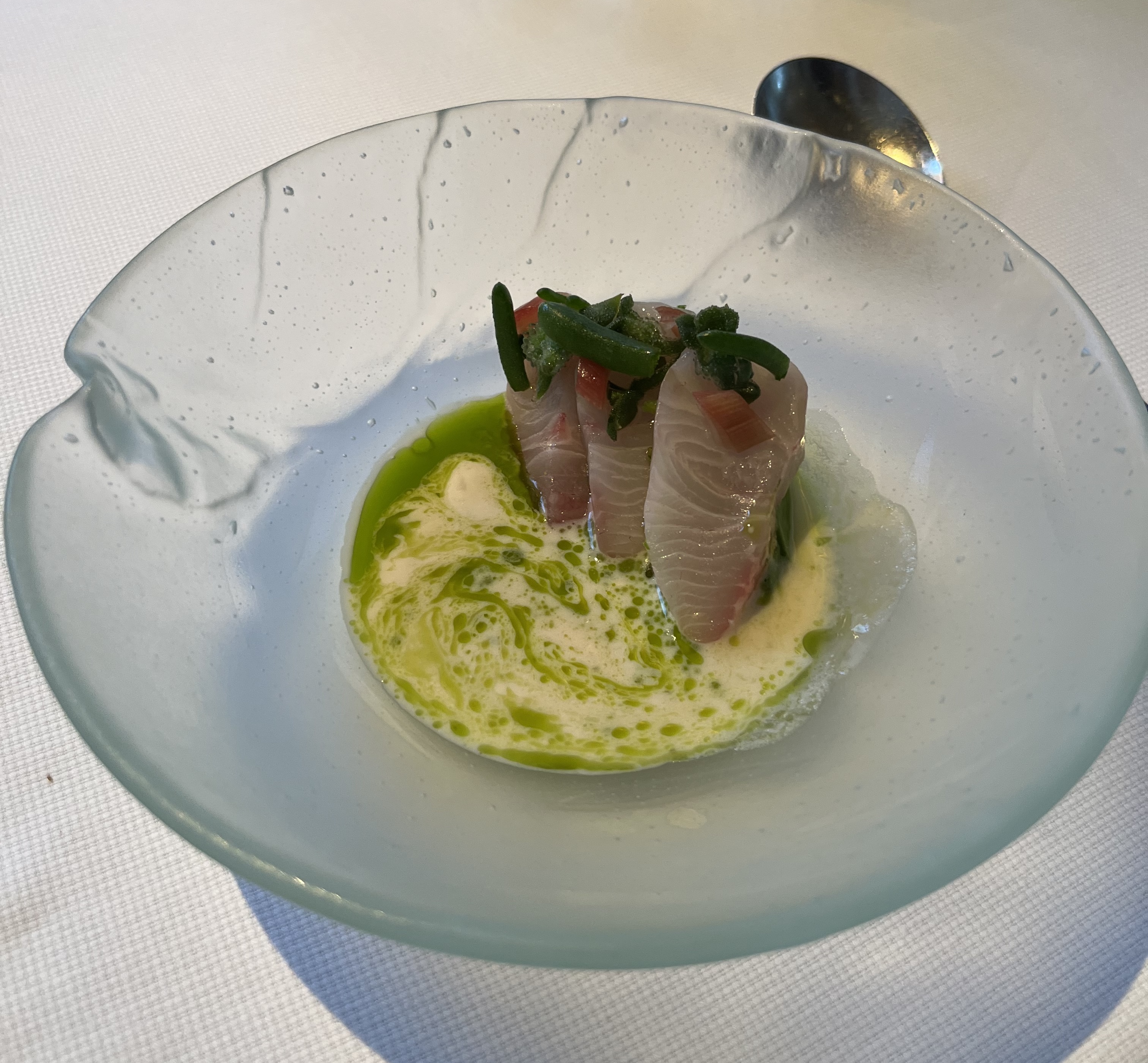
Another instance of this came from a kanpachi crudo. The fish was prepared with curry leaf gelee, coconut-sudachi emulsion, and a slice of avocado. The dish was strongly creamy and herbal in both flavor and texture but the fish took a backseat to all of this. It seemed like any number of different types of fish could have been used since the fish added no detectable taste and only a bit of texture. In fact, I found myself thinking that this could have been sucessful purely as an avocado dish. It’s a shame since kanpachi can be quite flavorful when fresh and if the restaurant had good quality sourcing it would have been nice to show that off, though I suppose this could have also been indicative of sub-optimal freshness.
In spite of my quibbles with some of these dishes, I thankfully still found them pleasant to eat. Part of the joy in these meals is to critically engage with their dishes, even if it means finding elements that aren’t entirely to one’s liking. As long as the dish remains enjoyable at a base level I don’t mind more cerebral objections. In fact, I have had meals that feel technically flawless but fail to imprint on my memory or draw me back for another visit. Elements that feel genuine to the spirit of the chef (and don’t interfere with the basic enjoyment of a meal) become part of the soul of a restaurant. And I will always prefer to revisit a restaurant with a soul over one that only offers technical precision.
Desserts
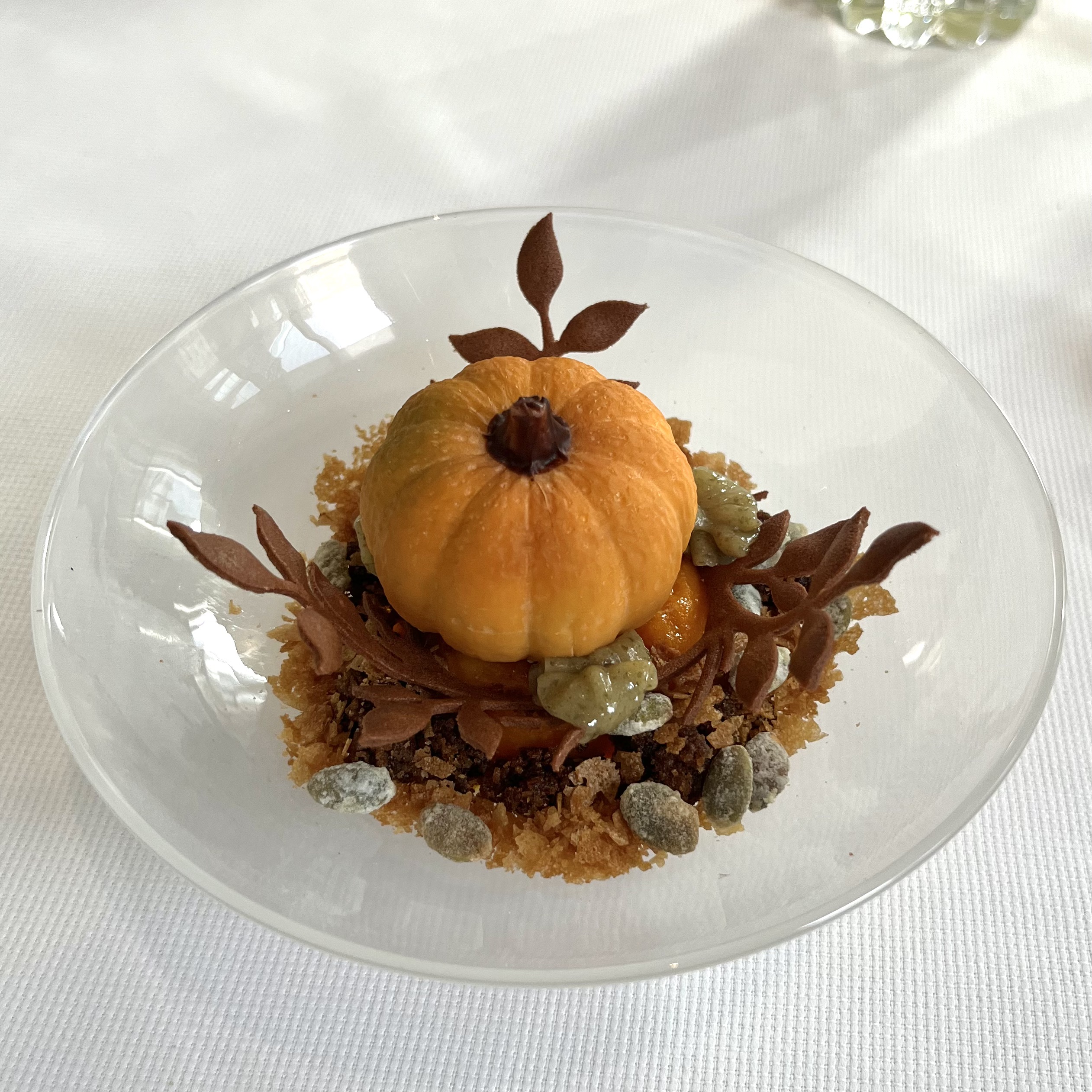
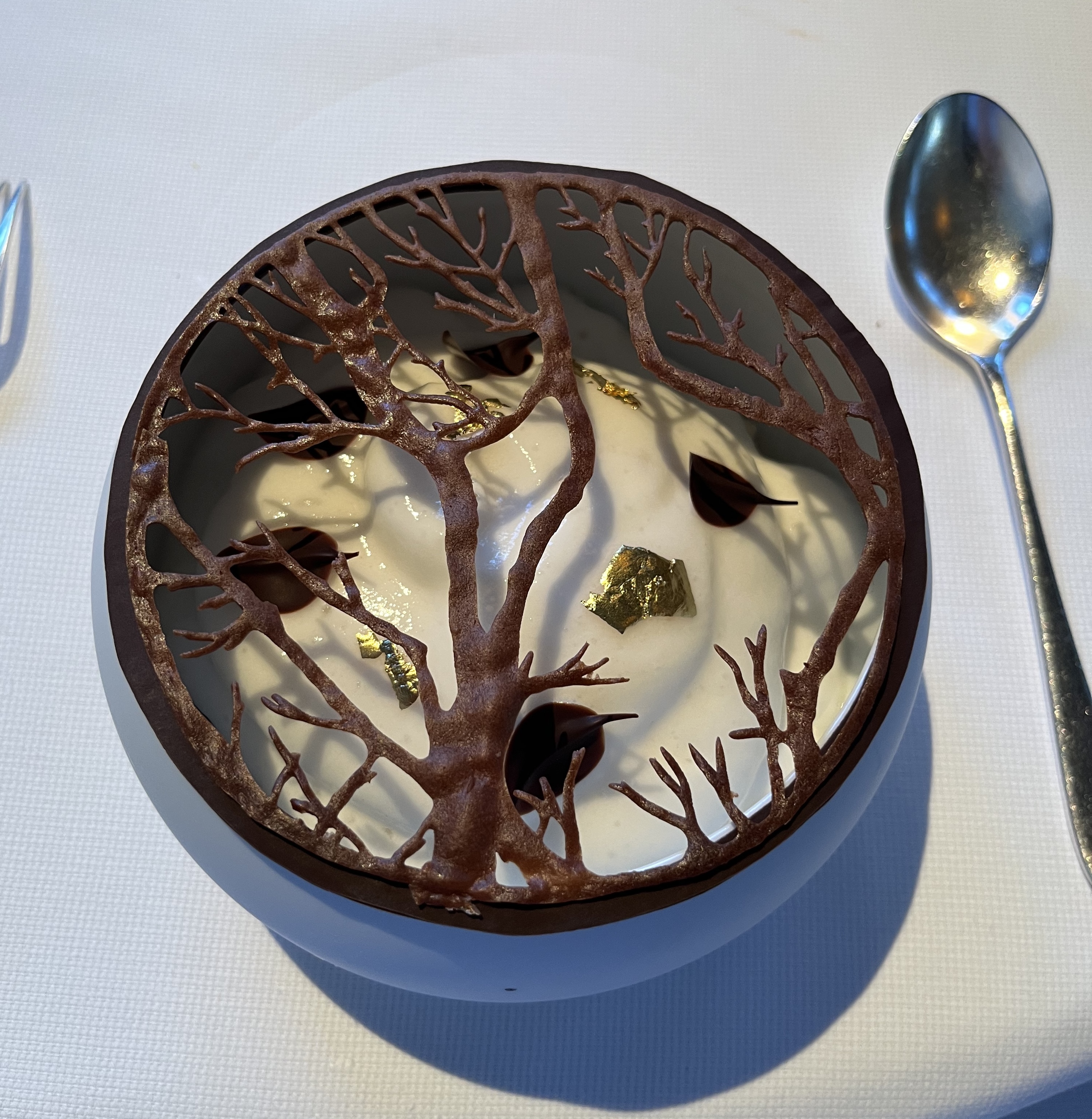
The dessert program at Jean-Georges is led by pastry chef Sean Considine and stands as one of my favorites in the city. My first meal concluded with a sugar pumpkin filled with spiced custard and my second meal with a black forest cake topped with almond meringue. The former did an impressive job capturing the essence of autumn and the latter featured an excellent balance of rich dark chocolate and tart cherries.
Jean-Georges is fairly unique in not serving a pre-dessert, choosing instead to channel their efforts into a single dessert. Perhaps it is because of this lack of pre-dessert that the sweet dishes tend to involve sorbet, honey-nut squash sorbet with the pumpkin and sour cherry with the black forest cake. These did a nice job adding an extra temperature dimension to the dishes.
Presentation is clearly a priority with the dishes and their use of sugar tuiles goes above and beyond the generic designs common even at restaurants of this caliber. The patterns of pumpkin vines for the sugar pumpkin or a literal forest for the black forest cake enhanced the dishes in thematically appropriate ways.
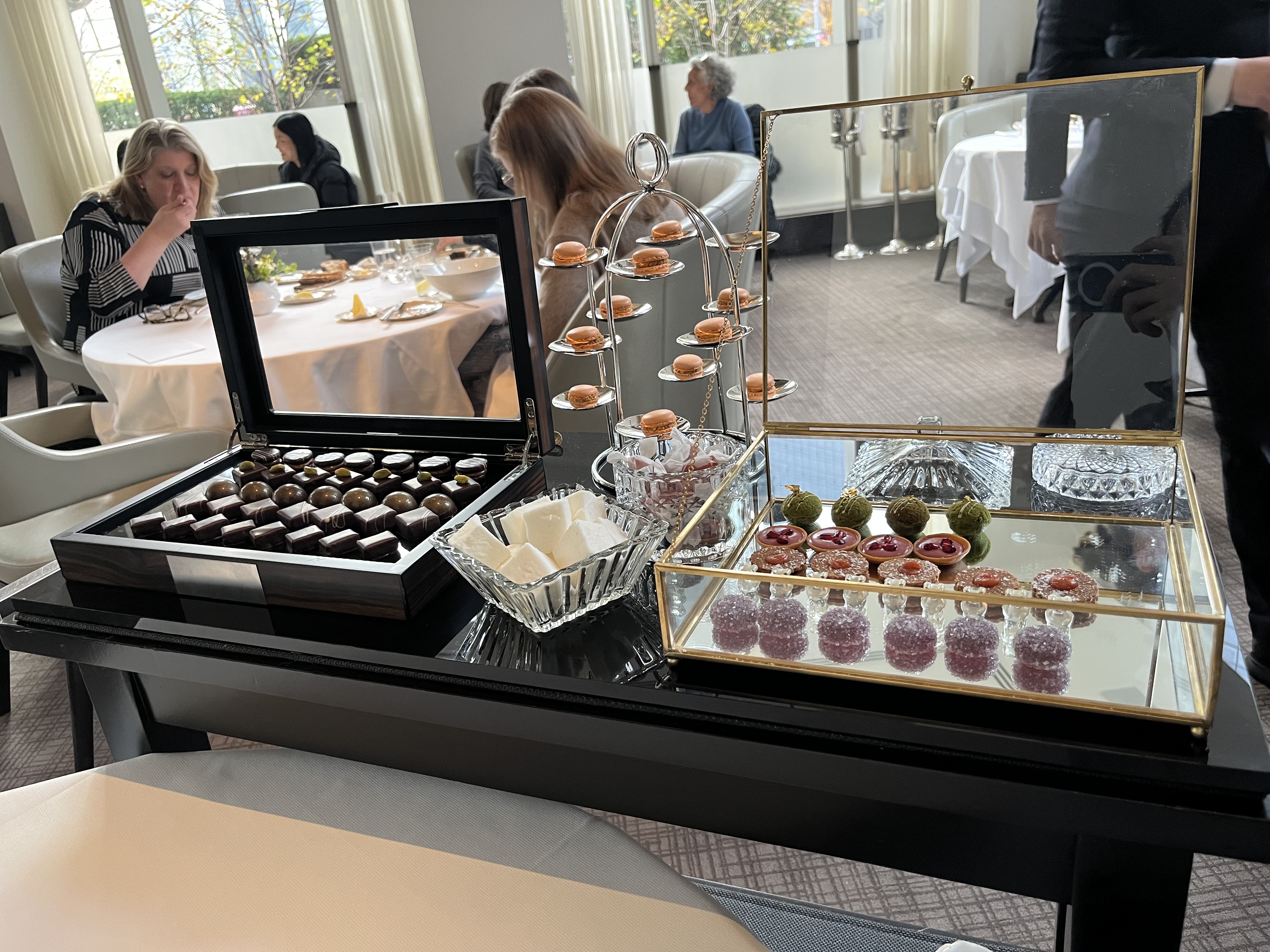
No visit to Jean-Georges is complete without the mignardise trolley. Featuring a wide array of handmade candies, guests are invited to choose as many as they wish and are even invited to try one of everything.
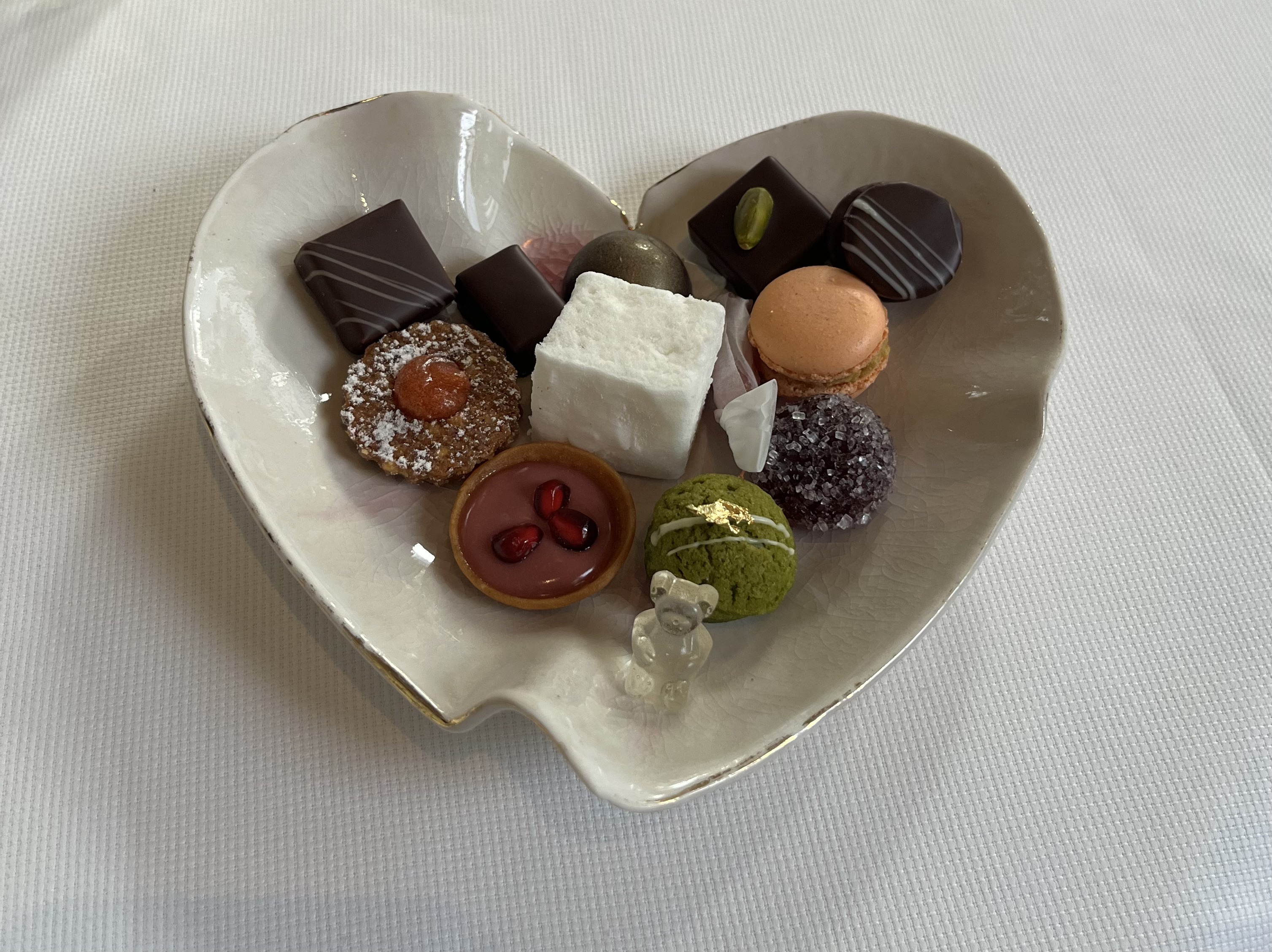
I have had no issue taking them up on this offer. Standout pieces across both visits are their sesame chocolates, marzipan bonbons, and their Madagascar vanilla marshmallow. I love how the mignardise trolley allows for guests who so desire to embrace the indulgence of trying as many as they’d like while also allowing those who are not overly fond of sweets to make a more modest selection (if any at all).
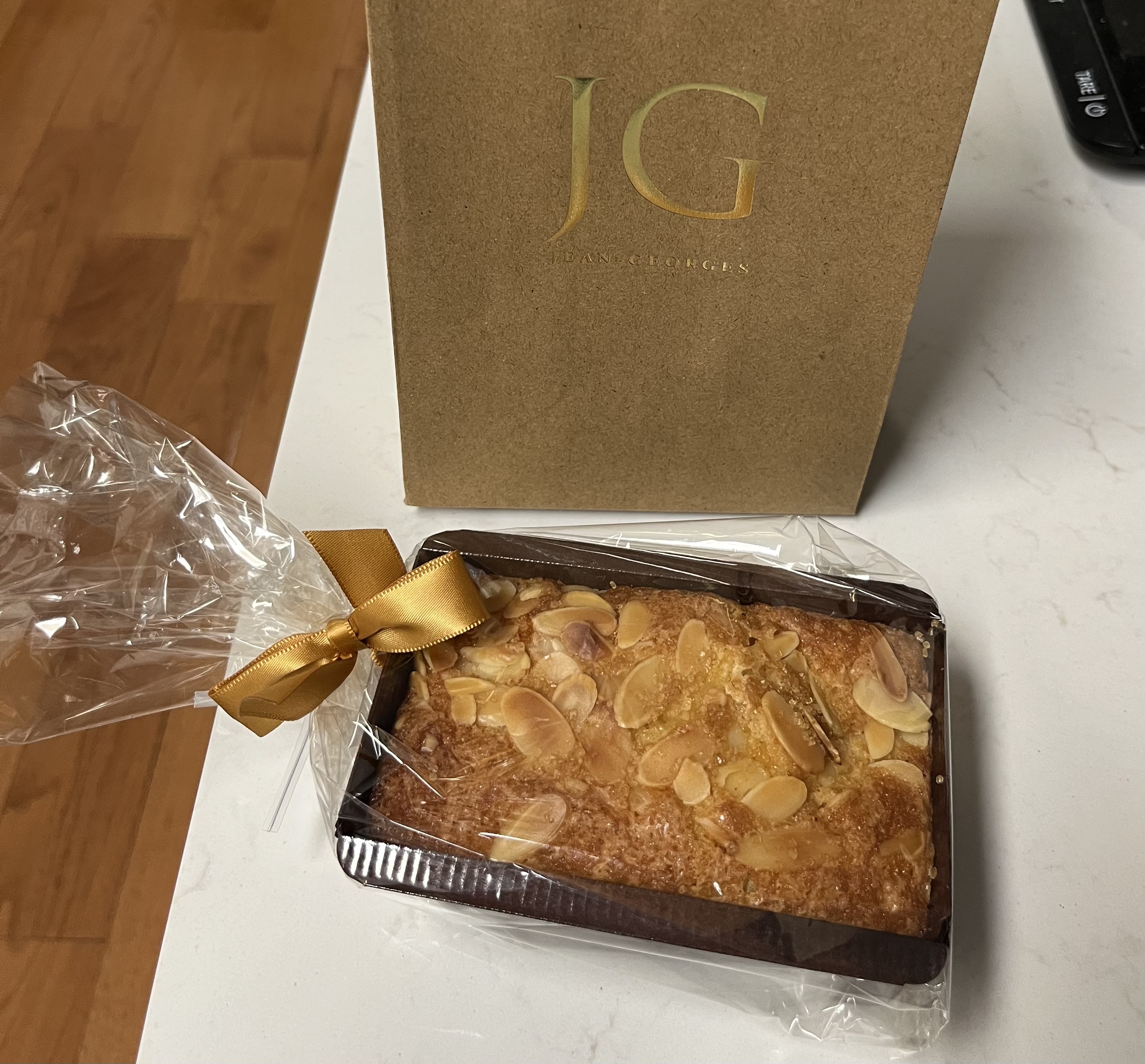
And if all that weren’t enough, a dinner at Jean-Georges will send one off with a parting gift of almond breakfast cake, a deliciously moist and nutty treat for the next day.
Final thoughts
Jean-Georges opened as the third restaurant in Chef Vongerichten’s restaurant portfolio, which has since grown into an empire that includes over 50 restaurants spread across the world. Day-to-day management of the kitchen has changed hands across various chefs de cuisine and executive chefs over the years, including Gabriel Kreuther (who now has his own namesake 2-star restaurant), Mark LaPico, and the current executive chef Joseph Rhee. While Chef Vongerichten has set up the kitchen of Jean-Georges to operate in his absence, he still makes regular appearances at his flagship (on my second visit he made an appearance in the dining room). And he’s been vocal in expressing his desire to regain the lost third star, alluding to such a goal as a factor in the restaurant’s elimination of a la carte options in 2019.
Will Jean-Georges regain its third star any time soon? While the Michelin Guide and its anonymous inspectors of course give no indication either way, public opinion does not seem to be inducing much pressure. Jean-Georges is not a favored son of surveys Opinionated About Dining or World’s 50 Best Restaurants, who prefer the likes of Atomix and César. Nor is it a darling of fine dining communities on Reddit, which would rather see the promotion of places like Blue Hill at Stone Barns or Aska. A factor that one can hardly escape is the restaurant’s location on the ground floor of Trump International Hotel and Tower. Given the Michelin Guide’s branding of 3-star restaurants as “worth a special journey”, this location has prompted some internet pundits of the tinfoil hat variety to speculate that the demotion was a political statement by Michelin. While the restaurant is not exactly proud of their location (their website and reservation pages prefer to simply refer to their address as “1 Central Park West”), I’m skeptical of the idea that the restaurant was demoted as a puntative political measure. A more likely explanation can be found in directly in the food.
When Jean-Georges first opened, New York Times food critic Ruth Reichl praised it as “a revolution” for embracing global flavors. Nearly 30 years later, menus aimed at global palates are not so revolutionary and in fact have become the standard. The aforementioned 2019 review by Vedat Milor called Jean-Georges “international luxury hotel dining” and said it lacks character. Another New York Times food critic, Pete Wells, did re-affirm the 4-star rating of his predecessor (in 2014) but towards the end of his career he would lament global styles supplanting restaurants with a sense of place: “There are restaurants like this in almost every major city now, imitation pearls on a string that circles the world. Once the door closes, you could be anywhere, or nowhere.”
I have no specific rebuttal to the critics whose palates are far more experienced than mine and I have no long term experience to know if the standards at Jean-Georges has fallen. It is true that the recent menus of Jean-Georges do little to offer a sense of place. Comparing them to the 1997 Classics menu, it appears that the Asian-accented French cuisine Jean-Georges once served has indeed pivoted to a Wellsian “food from nowhere” style. This style is indeed less tangible than those of other 3 star mainstays, like Per Se’s French plays on American dishes or Le Bernardin’s philosophy that “the fish is the star of the plate”.
But there’s one thing that bears mentioning, beyond the Michelin Guide’s assessments, critics views of global flavors, or even my own objections to some of Jean-Georges dishes being busy and unfocused. I think the food is consistently delicious.
Regardless of any intellectual objections I may or may not have, every dish I’ve had from Jean-Georges has delivered on tastiness. While the fusion of international flavors may not be as unique as when Jean-Georges first opened, it remains distinct in its execution. Few restaurants in NYC’s fine dining landscape are as willing to embrace spices and bold flavors the way Jean-Georges does. I am thankful for this. Internationally-influenced ingredient lists may be tiresome, but I am far more bothered by fine dining restaurants consistently bending to the will of “elevated” palates that are actually just afraid to exercise their taste buds. Subtle flavors, particularly in the Japanese style, can be a revelation but the idea that it’s the be-all and end-all of good cooking is no more correct than Escoffier’s codification of heavy and indulgent dishes.
Along those same lines, a vocal strain of diners (particularly those with East Asian palates) have been increasingly sharpening their pitchforks against desserts they find too sweet. As a personal preference I find this completely understandable. Less defensible is when these people dress up their personal preferences as “more refined” than others. And unfortunately restaurants are increasingly happy to accommodate these preferences when it means cutting pastry chefs from their payrolls. Thankfully Jean-Georges has not only continued to employ a (very talented) pastry chef, they make clever use of their mignardise trolley to allow guests to customize the end of their meal to suit their tolerance for sweets.
I don’t want a single dogma of bold vs subtle flavors or sweet vs not sweet desserts to stand dominant, I want a diverse landscape of fine dining. For that reason I am grateful for places like Jean-Georges that are willing to stand in brash defiance of any notion of focused minimalism. It’s a risky strategy, excusable only by the tastiness of the final product, but to my palate the risk pays off. I found my meals at Jean-Georges to carry a certain energy in their bold flavors, endearing even when they cross into excess. For that reason, regardless of whether or not 3 stars are in the cards, I find myself looking forward to my future meals at Jean-Georges.
(though I do wish it was in a different location)